Long before the many spectators at the Aloha Festivals Floral Parade see the beautiful and colorful pāʻū units on Kalākaua Avenue, Kimo Alama Keaulana and his crew are hard at work at Ala Moana Regional Park. Starting well before dawn, the pāʻū riders and wrappers secure yards and yards of fabric around each rider’s waist, pulling the cloth tight and fastening it with kukui nuts, carefully shaping it so it falls just right over the saddle and horse.
“The wrapping style and technique matter,” says Keaulana, who has been involved in Aloha Festivals parades since the 1970s. He takes the responsibility seriously, knowing how much pride and preparation each rider carries into the street. “I want the queen and her attendants to look beautiful.”
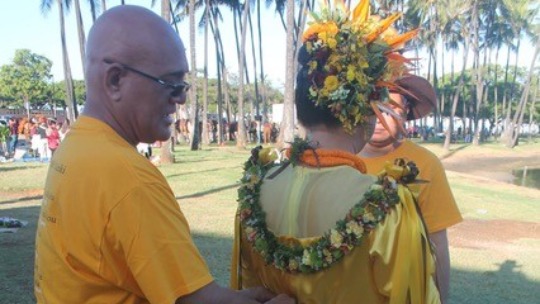
Kimo Keaulana wraps a pāʻū rider before the start of the Aloha Festivals Parade.
The beauty of pāʻū riding is steeped in Hawaiʻi history and cultural pride. The full name is pāʻū holo lio, referring to a riding skirt once used by Hawaiian women who rode astride, not side saddle, after horses became part of island life.
.JPG)
.JPG)
.JPG)
Pāʻū rider Pomai Toledo has a dress fitting with Kimo Keaulana.
In the early 1900s, pāʻū riders started making their way into parades. Today, spectators look forward to seeing their colorful lei, flowing satin dresses, and magnificent horses. But many people may not know how pāʻū riders came to share the parade route with floral floats and marching bands.
Portrait of Hawaiian history
Horses, along with cattle, were introduced to Hawaiʻi during the early 1800s as a gift to Kamehameha I. Eventually vaqueros (Mexican cowboys) were brought to the Islands to teach Hawaiians how to be paniolos (Hawaiian cowboys) to ranch cattle on horseback.
The paniolos’ wives also learned how to ride Western style saddle and would ride their horses to social functions. They needed something to protect their holokū (a style of dress) during their long dusty or rainy journey, so they’d wrap themselves in a protective pāʻū skirt.
Over time, that practical garment became pageantry. Keaulana, a former Hawaiian studies instructor at Honolulu Community College and kumu at Punahou School, says women horseback riders were famous for galloping through town with their pāʻū flying behind them. “They were daredevils,” he says. “People just loved the spectacle of these women riders.”
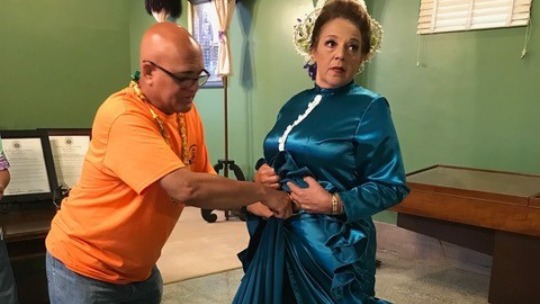
Kimo Keaulana helps to dress Pomai Toledo before a parade.
Keaulana believes the first known pāʻū tradition was started by the Holt family, who made their long journey by horseback from their Mākaha ranch to Downtown Honolulu. Queen Emma, wife of Kamehameha IV, also popularized horseback riding with her fine equestrian skills. People would watch her riding her well-trained horse Kīnaʻu every Sunday through Kakaʻako to Waikīkī.
The introduction of automobiles ended horseback riding on the streets. But to keep the tradition alive, riders were brought into parades as nostalgic glimpse of what used to be. “It was said that people would shed tears of joy watching them in the parade as a reminder of the olden days,” Keaulana says.
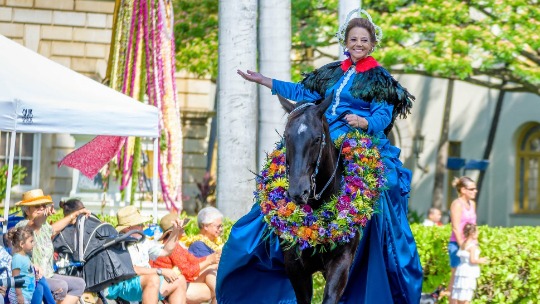
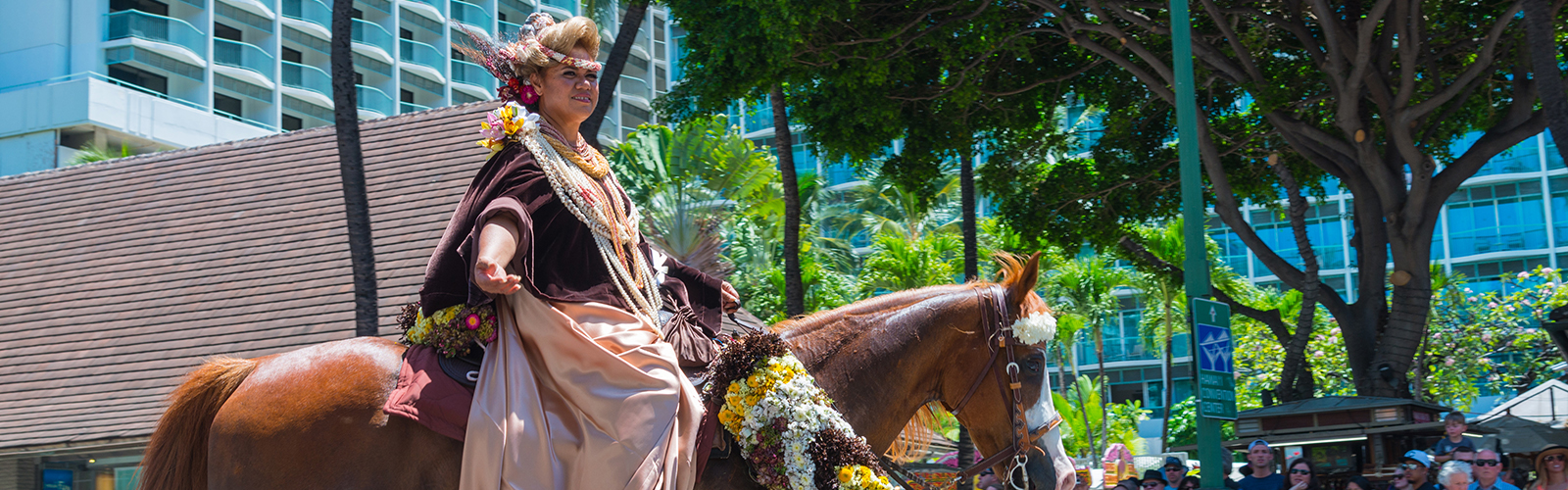
Pāʻū riders have become a beloved tradition in Hawaiʻi parades.
In 1923, Hawaiʻi’s Territorial Legislature established colors and lei symbols for each island that were eventually incorporated into the parades for each pāʻū unit. (See related sidebar below.)
Labor of love
Pāʻū units spend months practicing, gathering flowers, renting horses, and preparing garments. The wrapping itself is an art. About 12 yards of fabric are tied tightly around the rider, secured with six kukui nuts, and arranged so the satin glistens in the sunlight.
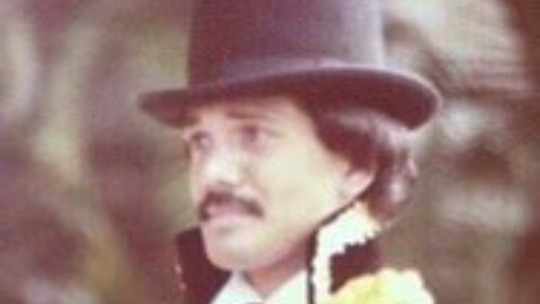
Kimo Keaulana in the 1980 Kamehameha Day Parade.
Keaulana started riding in parades in his early 20s. He first became fascinated by horses at age 10 when seeing master horseman Sonny Alapai ride up the steps of ʻIolani Palace after a parade and make his horse rise up on its hind legs. “Everybody was screaming with amazement,” he says. “I remember thinking, I want to do that.”
Keaulana last rode in a parade in 1986, but he remains deeply involved.
Riding with grace and grit
Pāʻū riding combines the discipline of horsemanship with the warmth of the aloha spirit. For Pomai Toledo, it’s also a source of cultural pride. She was selected as queen for the 2018 King Kamehameha Day Parade. She spent two years preparing – choosing attendants, securing horses, and practicing her riding skills. Many riders like Toledo have little experience, so confidence mattered. “The horse can feel you,” she says. “You have to control yourself physically and mentally.”
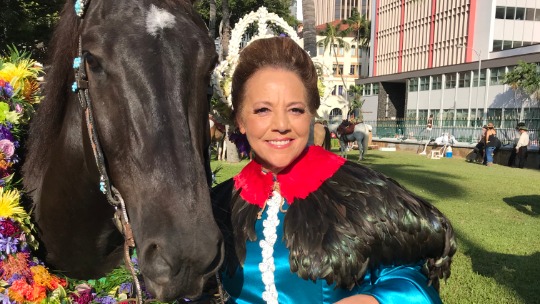
Pomai Toledo spent months training with her horse in preparation for the parade.
Aside from the pomp and pageantry, safety is number one. Riders must know their horses, anticipate street hazards, watch for manhole covers, and keep the crowd protected while acknowledging spectators. Mounted in full regalia, a queen must look composed and guide her horse with one hand and greet the crowd with the other. “You’re on display,” Toledo says. “People are watching and taking pictures that will live forever.”
Pageantry steeped in tradition and detail
Once dressed and mounted, the queen and her attendants follow protocol. There are no bathroom or water breaks. They uphold their regal composure and proudly represent their island’s flower and color. Units are judged on their lei, presentation, and horsemanship.
Toledo’s role in the parade carried special meaning. Toledo retired from ʻIolani Palace as director or development and communications three years ago. Her presentation honored Queen Liliʻuokalani, Hawaiʻi’s last reigning monarch who lived in the palace. Toledo wore peacock tones and a borrowed feather cape.
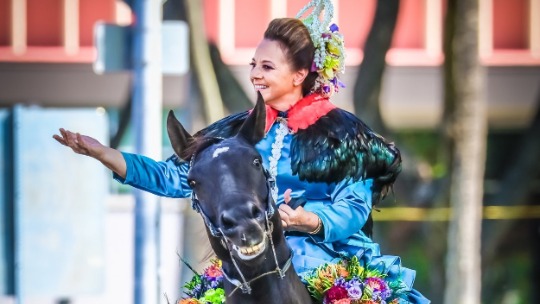
Pomai Toledo honored Queen Liliʻuokalani in the 2018 King Kamehameha Day Parade.
Toledo first started pāʻū riding in the 1970s, when the cost was a fraction of what it is today. Riders can spend thousands of dollars on horse rental, transportation, lei, costumes, and riding sessions. The investment is significant, but so is the honor. “It’s a once-in-a-lifetime opportunity,” she says. “It’s my way of sharing my culture and giving back.”
Keeping tradition alive
Keaulana worries the tradition is becoming harder to sustain, especially on Oʻahu, where horses, land, feed, farriers (who care for the horses’ hooves), and veterinary care are increasingly expensive. He’s seen other parade traditions fade. Decorating elaborate floats is also costly. He fears pāʻū riders could be next. Still, he vows to show up every Aloha Week parade before sunrise to tie each knot as if the future of the parade depends on it.
“If you don’t have pāʻū riders in your parade, you don’t have a Hawaiian parade,” he says. “You just have a parade.”
Photos courtesy Pomai Toledo and Kimo Kaulana
Watching the parade this Aloha Week? Brush up your parade knowledge.
Each horse riding unit honors a specific island using its traditional flower, color, and lei:
- Hawaiʻi Island (Big Island): Red (lehua flower)
- Maui: Pink (lokelani rose)
- Oʻahu: Yellow (ʻilima blossom)
- Kauaʻi: Purple (mokihana)
- Molokaʻi: Green (kukui)
- Lanaʻi: Orange (kaunaʻoa)
- Niʻihau: White (Pūpū shells/white flower)
- Kahoʻolawe: Grey/silver (hinahina)