
Sometimes success shows up in unexpected ways. Like a flock of chickens.
On a typical school day, Kohala High School's career and technical education lead teacher, Dean Snelling, was making his usual rounds across campus, checking on the school’s career pathways, programs that let students explore different fields through hands-on learning. When he circled back to his natural resources students, they were already done.
Forty-five chickens raised on the school’s farm had been plucked, cleaned, and packaged. The processing area was sanitized and spotless, and chickens were cooling in the freezer. With minimal guidance, the group completed a labor-intensive process that required skill, stamina, and attention to detail.
“It’s a really big deal,” says Snelling. “There’s a lot of intricacies with boiling the water, making sure it’s at the right temperature, making sure the feathers come off, making sure the product is clean and sanitary. It showed me the level of competency of the candidates in the pathway. It showed me their grit.”
That’s the kind of real-world learning that helped put this small, rural high school in Kapaau on the map.
Big achievements
With just 260 students, Kohala High School proves that size doesn’t limit impact. In 2025, it became the first small school in the nation to earn the National Career Academy Coalition’s Model Academy designation for its career pathways.
Snelling was also recognized with the John Thompson Exemplary Educator Award for his work as the lead teacher.
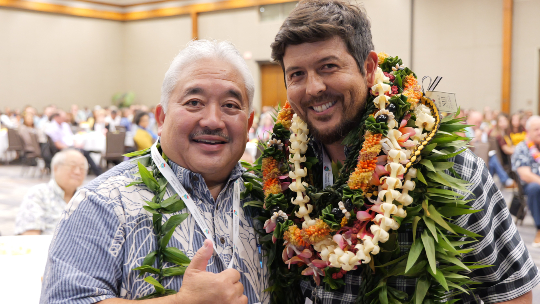
Keith Hayashi (left) and Dean Snelling were both recognized for implementing model academies. Photo courtesy Department of Education
Despite the accolades, Snelling is quick to redirect the spotlight.
“I’d rather celebrate the school and the students,” says Snelling. “They’re the ones who really bought into the program.”
Before returning home, Snelling taught at Waipahu High School for five years, where he learned under the guidance of then-principal Keith Hayashi, a longtime leader in career-based education and current Department of Education superintendent. Inspired by Waipahu’s nationally recognized model academy, where every student chooses a career pathway, Snelling set out to create similar opportunities for students in Kohala. Six years later, the program continues to grow.
Learning with purpose
Kohala High School offers four career academies that turn classroom learning into hands-on experience.
Students begin choosing pathways as freshmen, following interests that may one day become careers.
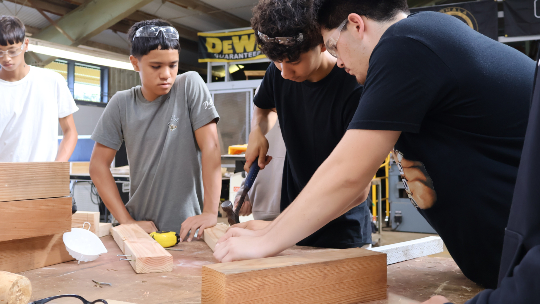
Students learn with hands-on training in Kohala High School's career pathways. Photo courtesy Kohala High School
From raising animals to building projects, students in natural resources and food systems participate in production cycles from start to finish. In construction, students take on design challenges using industry tools. Culinary arts students train in fast-paced kitchen environments where timing, safety, and presentation matter. Those in the health and nursing pathway develop skills that mirror clinical settings, learning where accuracy and communication are critical.
Across every pathway, learning stretches well beyond textbooks. Internships, hands-on projects, and job shadowing give students a clearer picture of what to expect after graduation.
Working together
For Snelling, those community partnerships are essential.
“One of the core parts of the academy model is to involve the community and business partners,“ says Snelling. “They're the real experts. They know what we need to prepare the kids for as far as technical skills. We really rely on them.”
The real-world connection makes learning more immediate and helps students build confidence in themselves.
Projects like processing the school’s chickens show students they can tackle work that’s complex and physically demanding. They learn how to stay organized, solve problems, and meet high standards from beginning to end.
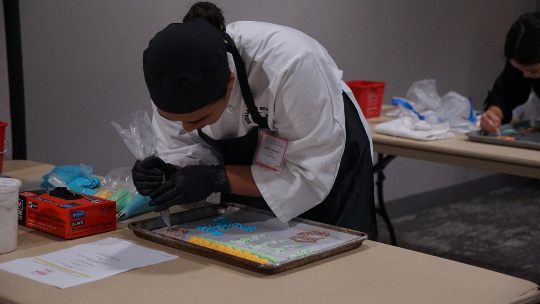
Hands-on experience is very valuable. Photo courtesy Kohala High School
“When you give students the opportunity, they always make the most of it,” Snelling says. “They almost always exceed your expectations.”
By the time they graduate, students leave with technical skills and experience. They’re also ready for what’s ahead, knowing they can take on hard things no matter what path they choose next.
Hero and thumb courtesy Hawaii Department of Education
Discover more standout schools
Read more about the exciting opportunities for keiki in Hawaii’s schools.