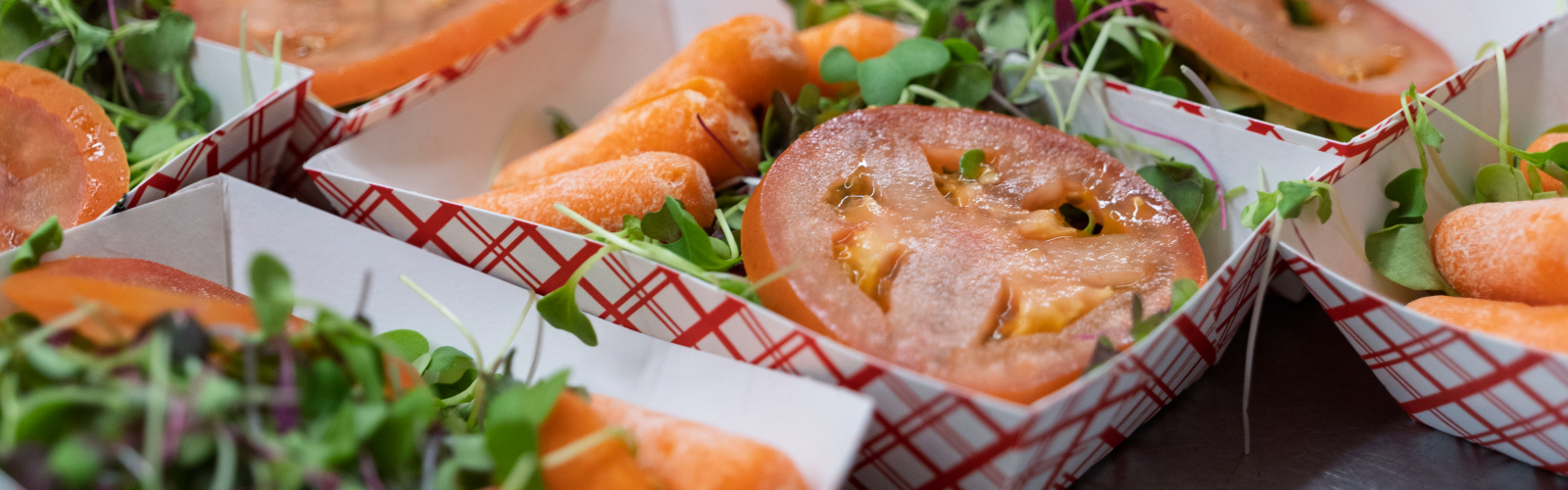
It’s lunchtime at Kahaluʻu Elementary School in Kāneʻohe, and amid the cheerful chatter and chocolate milk cartons, there’s something uniquely garden-fresh on the kids’ trays: crisp microgreens harvested just three days earlier.
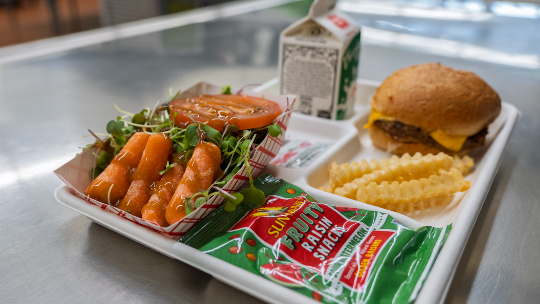
Freshly harvested greens for students. Photo courtesy Hawaiʻi State Dept. of Education
The vibrant blend of kale, mizuna, arugula, and amaranth was grown at a farm just steps away from campus. Tucked along the scenic Koʻolau Mountains, Kupu Place is known for its aquaponic lettuce, nutrient-dense microgreens, and edible flowers. But supplying greens to the school is a new venture. It’s part of a push by the Hawaiʻi Department of Education (DOE) to bring fresh, locally grown produce to school cafeterias while strengthening connections among schools, food, and community.
“Being so close to Kahaluʻu Elementary reinforces everything we believe in when it comes to island sustainability,” says Anthony Mau, Ph.D., co-founder of Kupu Place. “There are essentially zero food miles, which means no need for transport and storage costs, and the product itself is more nutritious.”
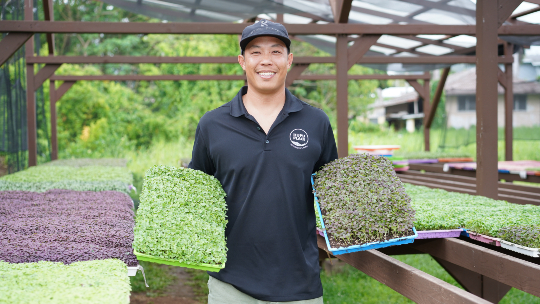
Anthony Mau, Ph.D. Photo by Earl Yoshii
This community-based sustainability model also emphasizes connection. Farmers have visited the school to talk story with the students and see how their hard work helps feed their community. In turn, the students have taken field trips to the farm to learn how the food they eat is grown and get some hands-on experience by planting seeds and watering plants.
“It’s a different kind of learning, one that happens outside the classroom,” explains Mau. “We’re showing the kids how science works on the farm. They’re getting their hands wet and feet in the mud, taking what they learn in class and seeing how it works in the field, then bringing that understanding back home.”
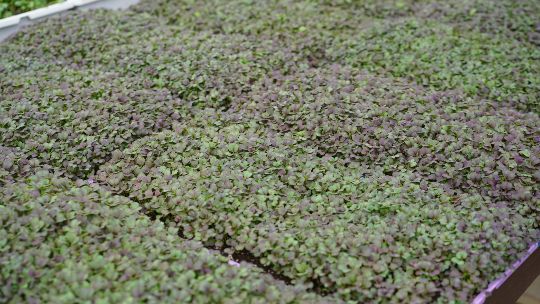
Rows of microgreens. Photo by Earl Yoshii
Kahaluʻu Elementary was the first school on Oʻahu to enjoy fresh, locally grown microgreens, but other schools across the state are also incorporating more local produce, like poi at Waikīkī Elementary, lettuce at Waipahu High, and ʻuala (sweet potato) at Hāna High and Elementary School on Maui.
“Locally sourced farm-to-school ingredients make our school meals fresher and improve student nutrition,” says DOE Superintendent Keith Hayashi. “By connecting classrooms to local agriculture, we strengthen our farmers, keep resources circulating within our Islands, and move closer to a self-sustaining economy rooted in community, culture, and care for our ʻāina.”
Back in the Kahaluʻu cafeteria, that vision was put to the test when the microgreens were offered with a tried-and-true kid favorite: cheeseburgers. For many of these students, it was their first time trying microgreens, and their reactions were honest and unfiltered.
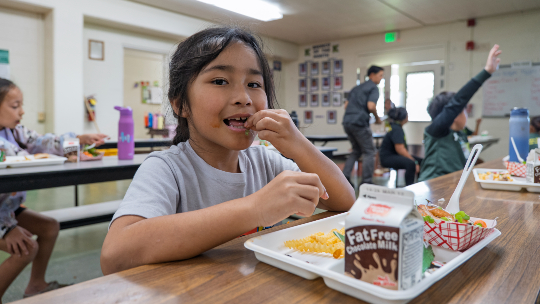
A vote of approval! Photo courtesy Hawaiʻi Dept. of Education
“They voted in front of us if they liked it or not, and the overwhelming response was they loved the microgreens,” says Mau. “And that honest enthusiasm was so validating. When you have a kid who’s trying this vegetable that’s basically out of this world to them, and they say, ‘This is my favorite vegetable,’ that’s so cool. It shows that something healthy and sustainable can really connect with people.”
FA26F