You may not realize it yet, but artificial intelligence (AI) already influences how we learn, work, and make decisions. In Hawaiʻi, where communities are closely tied to place, culture, and relationships, grappling with AI goes beyond technology. It’s become a shared responsibility, one that shapes who builds the systems, which is then woven into everyday life.
That concern is top of mind for Gloria Niles, chief academic technology innovation officer for the University of Hawaiʻi System. “Hawaiʻi is not a monolith,” she says. “If we don’t understand how these tools work, we risk having choices about our health, jobs, and children’s education shaped by systems that were never designed with us in mind.”
Take a moment
That’s where AI literacy comes in. Thankfully, it doesn’t require technical expertise or a background in computer science. Instead, it begins with recognizing when AI is involved, and knowing when to pause and ask a few basic questions: “Who created this tool, and for what purpose?” “What information does it rely on?” “Is it helping people make informed choices, or is it quietly making decisions for them?”
“Ethical use of AI begins with transparency and accountability,” Niles says. “In education, that means teachers remain trusted guides and students learn to question AI-generated content instead of simply accepting it. In the workplace, it means preparing people before new tools are introduced.”
AI literacy empowers users to move from passive use of AI technology to thinking more intentionally about how it fits into their lives. Students learn to evaluate information instead of taking it at face value. Educators lead conversations about bias, accuracy, and appropriate use. Workers gain confidence to speak up about how AI tools affect priorities, workloads, and responsibilities.
Get started
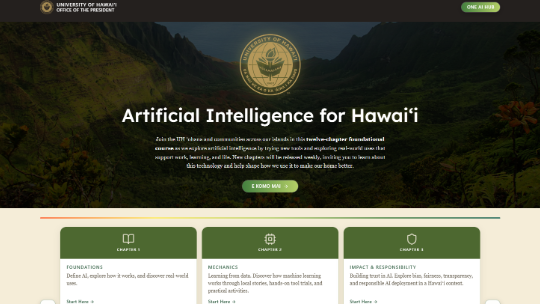
The University of Hawaiʻi launched Artificial Intelligence for Hawaiʻi, a free, 12-chapter online course created with local communities in mind. It offers a practical way to build foundational knowledge and use AI responsibly. Preparing for the future of AI in Hawaiʻi starts with informed participants who are willing to stay curious and stay engaged.
In this video, Niles discusses why AI literacy matters and how Hawaiʻi can help ensure AI reflects local culture, language, and community values.
This is the second in a series of articles on AI. Written by your very human Island Scene team.
Illustrations by Brandon Young
FA26F