Everything looks normal. The room hasn’t changed, and the people around you are the same. But suddenly, you feel strangely far away from it all, detached from your surroundings, and it feels like you’re watching your life from outside your body.
This feeling of disconnection is known as dissociation, and it affects people to varying degrees. Licensed marriage and family therapist Liza Alex Baker, LMFT, M.A., says dissociation exists on a spectrum, with zoning out and daydreaming on the lower end. On a moderate level, dissociation can feel like you’re:
- Outside your body.
- Looking in the mirror and not quite recognizing yourself.
- Dreamlike, foggy, or disoriented.
“People may think they’re going crazy, but they’re not,” says Baker. “When things feel too stressful, they’ve just learned it feels safer to go someplace else rather than stay in what’s happening.”
Your brain’s defense system
Everyone has a different capacity for stress. When you’re within your window of tolerance, you’re able to stay present and calm, think clearly, and manage your emotions. But when stress becomes too overwhelming, your nervous system can be pushed out of that window and into one of two responses: hyperarousal or hypoarousal.
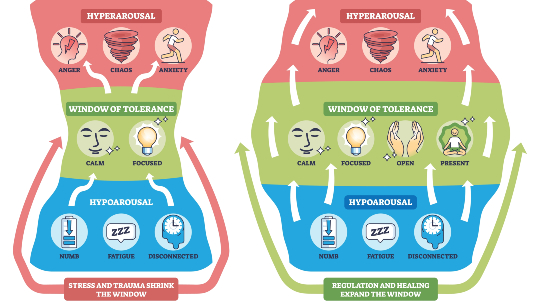
Dissociation falls into hypoarousal, which is below the window of tolerance and often characterized by brain fog, numbness, or fatigue.
“It’s a defense mechanism that typically develops early on,” says Baker. “Think about a child with trauma or neglect; it makes sense they often find it safer to ‘go’ someplace else.”
Over time, that response can become automatic in stressful moments. It provides relief in the moment, but dissociating becomes problematic when your brain relies on it long after the threat has passed. Being disconnected from yourself can make it harder to form deep, meaningful relationships, process emotions, and fully engage in daily life.
“You want to catch it because the longer dissociation goes on, sometimes it’s harder to get back,” says Baker.
Finding the source
Dissociation usually has an underlying cause. Stressful interactions, difficult memories, and certain smells or feelings can all initiate the brain’s protective response, so recognizing your triggers starts with self-awareness.

"When you start to feel a little fuzzy or spacey, ask yourself: ‘What happened? Was it a smell? Was it a memory? Was it something somebody said?’” Baker says. “Even labeling when you start to do it is helpful: ‘Oh, I know what’s happening. I’m dissociating.’ There's such a feeling of relief when people understand what it is.”
Back to the present
Once you understand and can name what’s happening, the next step is to know how to handle it in the moment. Coping mechanisms interrupt the pattern before it takes over, helping you reconnect with yourself and the present moment.
According to Baker, grounding techniques include:
- Choosing a color and finding every object in that color around you.
- Splashing cold water on your face or placing an ice pack on the back of your neck.
- Deep breathing exercises.
- The 5-4-3-2-1 method, which involves identifying things you can see, hear, feel, smell, and taste.
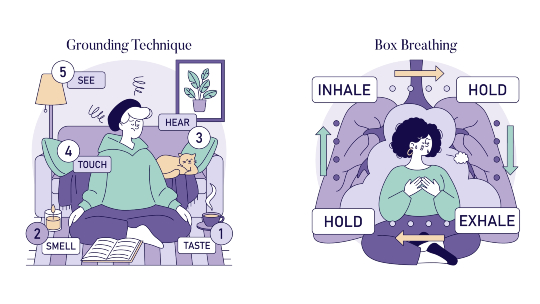
“I work with my clients to incorporate grounding exercises into their everyday life, so it becomes muscle memory,” she explains, “and when they disconnect, they can go right to that.”
Ultimately, Baker says widening your window of tolerance will help you tolerate stress more effectively, making it easier to stay present during stressful moments instead of mentally checking out.
"When your window of tolerance gets bigger, you become more aware of what your triggers are and how you respond," says Baker. "You’ll be able to catch that feeling quicker and get back into your mind."
Support your mental health
Take care of your mental well-being with more islandscene.com stories below: